What is a Vision Board? Complete Guide to Manifestation 2026
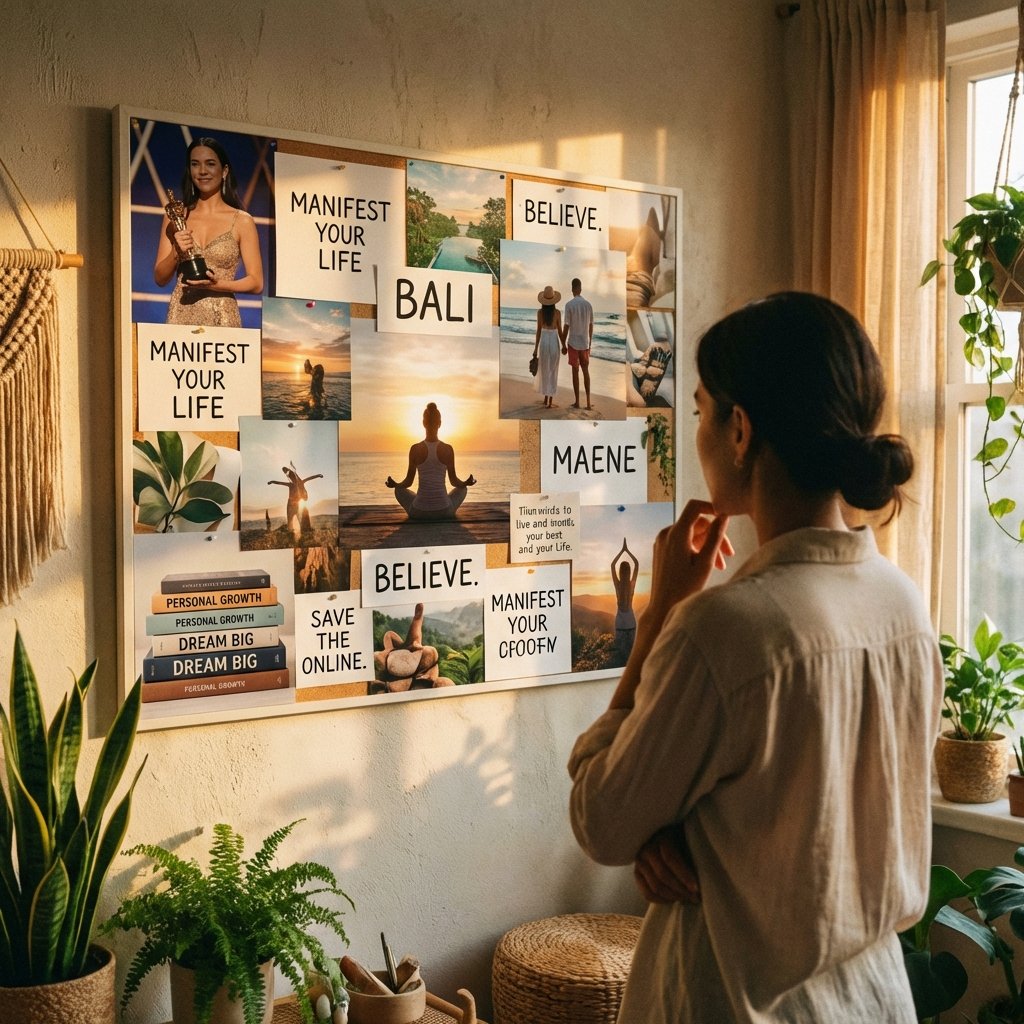
If you've ever felt overwhelmed by your goals or struggled to maintain focus on what truly matters, you're not alone. In a world full of distractions and competing priorities, staying aligned with your dreams can feel impossible. This is where vision boards come in – a simple yet powerful tool that has helped millions of people transform their aspirations into reality.
But what exactly is a vision board, and why has it become such a popular manifestation technique? In this comprehensive guide, you'll discover everything you need to know about vision boards, from the science that makes them work to practical tips for creating and using one effectively.
What is a Vision Board? The Complete Definition
A vision board (also called a dream board, goal board, or inspiration board) is a visual representation of your goals, dreams, and aspirations. It's a collage of images, words, quotes, and affirmations that represent what you want to achieve or become in your life.
Think of it as a visual roadmap to your ideal future. Instead of keeping your goals locked away in your mind or written in a forgotten journal, a vision board brings them to life through powerful imagery that you see every single day.
Key Components of a Vision Board:
- Visual Images: Photos, magazine cutouts, or digital images representing your goals
- Inspirational Words: Affirmations, quotes, and power words that motivate you
- Personal Photos: Pictures of yourself or loved ones to create emotional connection
- Symbols and Icons: Visual representations of abstract concepts or feelings
- Organized Layout: A thoughtful arrangement that creates visual harmony and impact
Vision boards can be physical (poster board, cork board, canvas) or digital (created using apps, software, or online tools like our free vision board maker). The format doesn't matter as much as the intention and emotional connection you bring to the process.
The Purpose and Power of Vision Boards
Vision boards serve multiple important purposes in your personal development journey:
1. Clarity and Focus
Creating a vision board forces you to get crystal clear about what you actually want. The process of selecting images and words requires you to define your goals specifically, which is the first step toward achieving them.
2. Daily Motivation
When you see your goals visualized every day, you're constantly reminded of why you're working hard and what you're working toward. This daily dose of inspiration helps maintain motivation even when challenges arise.
3. Subconscious Programming
Regular exposure to images of your desired outcomes programs your subconscious mind to recognize opportunities and resources that align with your goals. This is where the real "magic" of vision boards happens.
Ready to Create Your Vision Board?
Start manifesting your dreams with our free online vision board creator featuring customizable templates and instant PDF download.
Create Your Vision Board Now →The Science Behind Vision Boards: Why They Actually Work
Vision boards aren't just "woo-woo" manifestation tools – they're grounded in legitimate psychological and neuroscientific principles. Here's the science that explains why vision boards are so effective:
The Reticular Activating System (RAS)
Your brain has a filtering mechanism called the Reticular Activating System that determines which information gets your conscious attention. When you regularly view images on your vision board, you're essentially programming your RAS to notice opportunities, resources, and information related to those goals.
For example, if your vision board includes images of your dream home, your RAS will start highlighting real estate opportunities, home design ideas, and financial strategies that could help you achieve that goal. Information that was always there suddenly becomes visible to you.
Visualization and Neural Pathways
Neuroscience research shows that visualization activates the same neural pathways as actually performing an action. When you visualize success, your brain creates mental blueprints that make the actual achievement feel more familiar and attainable.
Athletes have used this principle for decades – Olympic champions visualize perfect performances before competing. Your vision board facilitates this same powerful visualization practice for your life goals.
Different Types of Vision Boards
Vision boards come in various formats and styles. Understanding the different types helps you choose the approach that best fits your personality and goals:
Traditional Physical Vision Boards
The classic approach using poster board, cork board, or canvas with physical images, cutouts, and materials.
- Best for: Tactile learners, those who enjoy crafting, people who want a prominent wall display
- Pros: Tangible, therapeutic creation process, strong emotional connection
- Cons: Requires physical materials, harder to update, takes up space
Digital Vision Boards
Created using apps, software, or online tools and viewed on devices.
- Best for: Tech-savvy individuals, people who travel frequently, those who prefer minimalism
- Pros: Easy to update, accessible anywhere, environmentally friendly
- Cons: Requires screen time, may feel less personal
Check out our aesthetic vision board ideas to make your digital board look beautiful.
Themed Vision Boards
Focused on specific life areas or goals:
- Career Vision Board: Professional goals and aspirations
- Health & Wellness Board: Fitness, nutrition, and mental health goals
- Relationship Board: Love, family, and connection goals
- Financial Board: Money goals and abundance mindset
- Travel Board: Destinations and experiences
How to Get Started with Your First Vision Board
Ready to create your own vision board? Here's a quick-start guide:
Step 1: Reflect on Your Goals
Spend time thinking about what you want in different life areas: career, health, relationships, finances, personal growth, and experiences. Write down your goals.
Step 2: Choose Your Format
Decide whether you want a physical or digital vision board. Consider using a vision board template to simplify the process.
Step 3: Gather Materials
For physical boards: poster board, magazines, scissors, glue, markers. For digital boards: access to our free vision board creator or design software.
Step 4: Collect Images and Words
Find visuals that represent your goals. Need sources? Check out our list of best vision board pics sites. Trust your intuition – if an image resonates, include it.
Step 5: Create Your Layout
Arrange your images thoughtfully. You can organize by life area, priority, or create a free-flowing collage. Aim for visual balance.
Step 6: Display and Engage
Place your vision board where you'll see it daily. Spend 5-10 minutes each day visualizing your goals and connecting emotionally with the images.
For detailed instructions, read our comprehensive guide on how to make a vision board.
Success Story
Oprah Winfrey, Jim Carrey, and countless other successful people credit vision boards as instrumental in their achievements. Jim Carrey famously wrote himself a check for $10 million for "acting services rendered" and kept it in his wallet. Years later, he received exactly that amount for his role in Dumb and Dumber. While this is an extreme example, it illustrates the power of clear visualization combined with dedicated action.
Start Your Vision Board Journey Today
Now that you understand what a vision board is, how it works, and why it's such a powerful manifestation tool, you're ready to create your own. Remember, a vision board is more than just a creative project – it's a commitment to yourself and your dreams.
The most important thing is to start. Don't wait for the perfect time or the perfect images. Begin with what you have, stay consistent with daily visualization, and take inspired action toward your goals. Your vision board is a living document that will evolve as you grow and achieve.
Ready to Manifest Your Dreams?
Start creating your vision board today with these free resources: